Fish oil
Fish oil explained: what it is, how it works and who it's for
A plain-English guide to EPA and DHA, how the body uses them, and which of fish oil's many claims hold up when researchers test them.
By Artifact Editors, Editorial team
Published · 6 min read
In this article
What fish oil is, and what is actually in it
Fish oil is oil taken from fatty fish and sold mostly for two fats: EPA (eicosapentaenoic acid) and DHA (docosahexaenoic acid). Both belong to the omega-3 family. "Omega-3" is a category of fats, not a single ingredient, and fish oil is one marine source of it. Our fish oil topic page collects the rest of our coverage.
Plants supply a third omega-3, ALA, found in flaxseed, chia, walnuts and canola oil. The body can convert some ALA into EPA and DHA, but only in small amounts. ALA-rich foods are therefore not a direct substitute for the EPA and DHA in fish or fish oil.
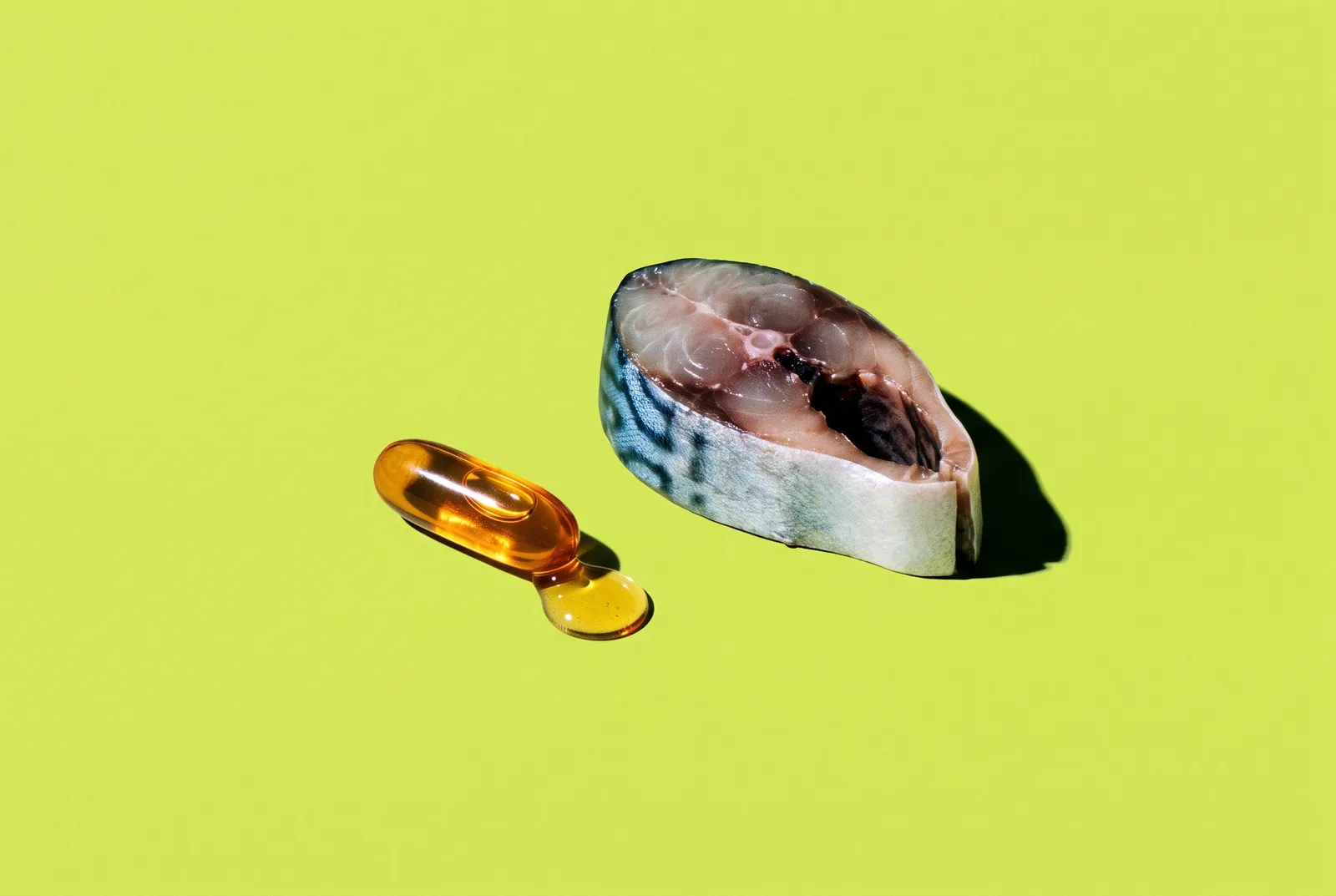
Food is the baseline for comparison. Per USDA data, a 3-ounce cooked serving of mackerel provides roughly 1,800–2,600 mg of combined EPA and DHA, and salmon roughly 1,000–1,900 mg. Canned light tuna and shrimp land around 150–300 mg. A supplement's main selling point is consistency: a fixed, known amount each day instead of a variable fish serving.
Blends sold as omega 3-6-9 are a different product. Omega-6 and omega-9 fats are structurally distinct, and most Americans already get plenty of omega-6 from vegetable oils. A fish oil concentrate is built around EPA and DHA alone.
How it works in the body
When you take EPA and DHA, they show up in your blood and in cell membranes. Researchers track this with the omega-3 index, a lab test of how much EPA and DHA sits in red blood cell membranes. In a trial of 115 healthy adults, daily doses from 300 mg to 1,800 mg of EPA and DHA raised the index in a dose-dependent way over about five months.
That result is a biomarker, not a health outcome. It tells you the supplement does what it is supposed to do at the level of blood chemistry, and that more generally means a higher level. It does not tell you that a higher index makes you healthier.
The index has been proposed as a cardiovascular risk marker, with 8% or higher linked to the lowest risk and 4% or lower to the highest in the studies reviewed. Treat that as a research risk score, not a clinical deficiency diagnosis.
Marine omega-3 also shows up in inflammation research. A 2014 meta-analysis of 68 trials found it lowered the lab markers CRP, IL-6 and TNF-alpha, with larger effects from longer supplementation. Lower markers are not the same as feeling better, and as the table below shows, symptom trials are far less consistent.
The heart: where the evidence is strongest, and where it frays
Triglycerides are the clearest case. A 2019 American Heart Association advisory concluded that prescription omega-3 at 4 g a day lowers triglycerides by at least 30% in adults who already have high levels. That is a prescription dose, several times what a typical over-the-counter softgel provides.
Hard outcomes are messier. One trial in 8,179 people already treated for cardiovascular disease or diabetes found that 4 g a day of a prescription EPA drug cut a composite of cardiovascular events from 22.0% to 17.2% over about five years, but also increased hospitalization for atrial fibrillation. An older trial in 11,324 heart attack survivors found a 10–15% reduction in a composite of death, non-fatal heart attack and stroke with 1 g a day.
Then comes the pooled picture. The largest review to date, covering 86 trials and 162,796 people, found little or no effect of omega-3 on death, cardiovascular events, stroke or arrhythmia at any dose tested. A separate 2021 meta-analysis of seven large trials linked marine omega-3 to a higher risk of atrial fibrillation, with the risk rising at doses above 1 g a day.
Blood pressure shows a modest effect. A dose-response analysis of 71 trials found reductions of about 2.6 mmHg systolic and 1.6–1.8 mmHg diastolic, concentrated at 2–3 g a day of EPA and DHA. An umbrella review across all doses put the average lower, about 1.2 and 0.9 mmHg. In people with type 2 diabetes, a Cochrane review found omega-3 lowered triglycerides but raised LDL cholesterol slightly, with no effect on blood sugar.
Everything else: a claim-by-claim reality check
Fish oil has been tested for a long list of conditions. The pattern is consistent: small effects, very low certainty, benefits that appear only at high doses, or nothing at all.
| Claim | What the best available evidence found | How much to trust it |
|---|---|---|
| Depression | A Cochrane review found a small effect in major depression, unlikely to be clinically meaningful; EPA-dominant products at 1 g/day or less looked better than DHA-dominant ones | Very low certainty |
| Anxiety | Symptom reductions appeared only at 2 g/day or more | Very low certainty |
| ADHD in children | A 2023 analysis of 22 trials found no significant overall effect, though trials of 4+ months did show one; an earlier analysis found a small benefit | Inconsistent |
| Memory and dementia | No cognitive benefit in healthy older adults across the three largest trials; 900 mg/day of DHA improved two memory measures in adults with age-related decline; dementia risk was not measured | Mixed, no dementia data |
| Arthritis | Small pain benefit in rheumatoid arthritis, none in osteoarthritis | Low |
| Migraine | A 2025 analysis found no significant effect on frequency, severity or duration | Mostly negative |
| Sleep in adults | No effect on duration, latency, efficiency or insomnia severity | Negative |
| Cancer | 1 g/day for a median of 5.3 years did not change cancer diagnoses or deaths in 25,871 adults | Negative |
| Menstrual pain | Large reductions in pain and painkiller use, with mostly neutral-quality studies | Promising but low quality |
| Hot flashes | 1.8 g/day for about 12 weeks made no difference in 899 women | Negative |
| Fatty liver | No effect on imaging-measured liver fat; improvements appeared in studies relying on blood tests | Conflicting |
| Weight loss | No change in body weight; some reduction in waist circumference and fat mass alongside exercise | Weak |
A few findings sit in the margins. Some trials of eczema and acne used small samples, and the eczema trial used 5.4 g of DHA a day, far beyond a typical dose. Most trials of omega-3 in these areas are too small or too short to settle anything. Omega-3 intake from diet also showed an association with lower success of H. pylori antibiotic treatment in an observational study, a reminder that more is not uniformly better.
Who it is for
The honest answer is narrower than the marketing. Fish oil makes the most sense for people who rarely eat fatty fish and want a predictable amount of EPA and DHA. It is not a stand-in for a health plan, and it does not treat or prevent disease.
- People who skip fish. A single serving of salmon or mackerel supplies several times the EPA and DHA of a typical softgel, so eating fish does the same job. A supplement fills the gap when you will not.
- People who avoid animal products. In a 2025 trial of 74 adults, algae-oil omega-3 raised blood DHA and EPA about as well as fish oil over 14 weeks.
- Adults with high triglycerides. The effective doses are prescription-level, so this is a conversation for a clinician, not a shelf purchase.
- Pregnancy. A Cochrane review of 70 trials found omega-3 lowered preterm birth rates from 13.4% to 11.9%, with a probable small increase in pregnancies lasting past term. Dose and product are worth settling with a prenatal provider.
If you want a broader checklist, the guide on who should not take fish oil covers the cautions in more depth.
Dose, form and how to take it
No single dose fits every goal. The omega-3 index rose even at 300 mg a day, but most trials that found clinical effects used 2 g or more. That gap matters: a result from a 2–4 g trial does not transfer to a 300 mg softgel. Check the label for EPA and DHA amounts, not just the total milligrams of oil.
Form is a live debate. Without food, free fatty acid fish oil was absorbed best in one small single-dose trial, the natural triglyceride form somewhat less well, and ethyl esters about a fifth as well as the free acid. But when doses were matched exactly over four weeks in 66 healthy adults, blood levels did not differ significantly between ethyl ester, triglyceride and krill oil. That trial was funded by an ingredient manufacturer. For more detail, see this comparison of fish oil forms.
Food is the easier lever. In a small 1988 trial, eating fish oil with a high-fat meal raised EPA absorption from the triglyceride form from 69% to 90% compared with a lower-fat meal, and roughly tripled absorption of both fats from the ethyl ester form. Taking it with a meal is a sensible default.
Safety, side effects and interactions
Side effects are mostly minor. A meta-analysis of 21 trials (24,460 people) using prescription-strength omega-3 found fishy aftertaste and skin reactions were more common than with placebo, and EPA plus DHA combinations caused more burping and nausea. No clear evidence of serious adverse events turned up.
Two cautions deserve attention. First, fish oil has a weak blood-thinning effect on its own, which becomes more noticeable alongside antiplatelet drugs and, to a lesser extent, warfarin or factor Xa inhibitors. Alone, it was not linked to a meaningful increase in surgical bleeding risk. Second, atrial fibrillation risk rose with dose in large trials, so higher intakes are not simply a stronger version of lower ones.
Frequently asked questions
Is fish oil the same as omega-3?
Not exactly. Omega-3 is a family of fats that includes plant-based ALA as well as marine EPA and DHA. Fish oil is one source of EPA and DHA specifically. Flaxseed, chia and walnuts supply ALA, which the body converts to EPA and DHA only in small amounts.
How long does it take for fish oil to raise omega-3 levels?
In a trial of 115 healthy adults, the omega-3 index rose in a dose-dependent way over about five months of daily supplementation at 300–1,800 mg of EPA and DHA. That measures blood levels only. It says nothing about how quickly any symptom or health outcome might change.
Does fish oil lower cholesterol?
Fish oil lowers triglycerides, a type of blood fat, particularly at prescription doses. It does not reliably lower LDL cholesterol. A Cochrane review in people with type 2 diabetes found triglycerides fell while LDL rose slightly, so it is not a cholesterol treatment.
Is there a vegan alternative to fish oil?
Algae oil is the usual plant-derived option, since algae are the original source of DHA and EPA in fish. In a 2025 trial of 74 adults, algae-oil omega-3 raised blood DHA and EPA about as well as fish oil over 14 weeks. It is a small study.
Can fish oil cause side effects?
Yes, usually mild. Pooled trial data show fishy aftertaste and skin reactions are more common than with placebo, and EPA plus DHA products caused more burping and nausea. Taking it with a meal may help. Higher doses are linked to a greater risk of atrial fibrillation.
Sources (38)
- Lawson LD, et al. Absorption of eicosapentaenoic acid and docosahexaenoic acid from fish oil triacylglycerols or fish oil ethyl esters co-ingested with a high-fat meal. Biochem Biophys Res Commun. 1988.
- Flock MR, et al. Determinants of erythrocyte omega-3 fatty acid content in response to fish oil supplementation: a dose-response randomized controlled trial. J Am Heart Assoc. 2013.
- Harris WS, et al. The Omega-3 Index: a new risk factor for death from coronary heart disease?. Prev Med. 2004.
- Li K, et al. Effect of marine-derived n-3 polyunsaturated fatty acids on C-reactive protein, interleukin 6 and tumor necrosis factor α: a meta-analysis. PLoS One. 2014.
- Skulas-Ray AC, et al. Omega-3 Fatty Acids for the Management of Hypertriglyceridemia: A Science Advisory From the American Heart Association. Circulation. 2019.
- Bhatt DL, et al. Cardiovascular Risk Reduction with Icosapent Ethyl for Hypertriglyceridemia. N Engl J Med. 2019.
- Dietary supplementation with n-3 polyunsaturated fatty acids and vitamin E after myocardial infarction: results of the GISSI-Prevenzione trial. Gruppo Italiano per lo Studio della Sopravvivenza nell'Infarto miocardico. Lancet. 1999.
- Abdelhamid AS, et al. Omega-3 fatty acids for the primary and secondary prevention of cardiovascular disease. Cochrane Database Syst Rev. 2020.
- Gencer B, et al. Effect of Long-Term Marine ɷ-3 Fatty Acids Supplementation on the Risk of Atrial Fibrillation in Randomized Controlled Trials of Cardiovascular Outcomes: A Systematic Review and Meta-Analysis. Circulation. 2021.
- Zhang X, et al. Omega-3 Polyunsaturated Fatty Acids Intake and Blood Pressure: A Dose-Response Meta-Analysis of Randomized Controlled Trials. J Am Heart Assoc. 2022.
- Musazadeh V, et al. The beneficial effects of omega-3 polyunsaturated fatty acids on controlling blood pressure: An umbrella meta-analysis. Front Nutr. 2022.
- Hartweg J, et al. Omega-3 polyunsaturated fatty acids (PUFA) for type 2 diabetes mellitus. Cochrane Database Syst Rev. 2008.
- Appleton KM, et al. Omega-3 fatty acids for depression in adults. Cochrane Database Syst Rev. 2021.
- Liao Y, et al. Efficacy of omega-3 PUFAs in depression: A meta-analysis. Transl Psychiatry. 2019.
- Bafkar N, et al. Efficacy and safety of omega-3 fatty acids supplementation for anxiety symptoms: a systematic review and dose-response meta-analysis of randomized controlled trials. BMC Psychiatry. 2024.
- Liu TH, et al. Omega-3 Polyunsaturated Fatty Acids for Core Symptoms of Attention-Deficit/Hyperactivity Disorder: A Meta-Analysis of Randomized Controlled Trials. J Clin Psychiatry. 2023.
- Bloch MH, et al. Omega-3 fatty acid supplementation for the treatment of children with attention-deficit/hyperactivity disorder symptomatology: systematic review and meta-analysis. J Am Acad Child Adolesc Psychiatry. 2011.
- Sydenham E, et al. Omega 3 fatty acid for the prevention of cognitive decline and dementia. Cochrane Database Syst Rev. 2012.
- Yurko-Mauro K, et al. Beneficial effects of docosahexaenoic acid on cognition in age-related cognitive decline. Alzheimers Dement. 2010.
- Senftleber NK, et al. Marine Oil Supplements for Arthritis Pain: A Systematic Review and Meta-Analysis of Randomized Trials. Nutrients. 2017.
- Talandashti MK, et al. Effects of selected dietary supplements on migraine prophylaxis: A systematic review and dose-response meta-analysis of randomized controlled trials. Neurol Sci. 2025.
- Dai Y, et al. Omega-3 long-chain polyunsaturated fatty acid and sleep: a systematic review and meta-analysis of randomized controlled trials and longitudinal studies. Nutr Rev. 2021.
- Manson JE, et al. Marine n-3 Fatty Acids and Prevention of Cardiovascular Disease and Cancer. N Engl J Med. 2019.
- Snipe RMJ, et al. Omega-3 long chain polyunsaturated fatty acids as a potential treatment for reducing dysmenorrhoea pain: Systematic literature review and meta-analysis. Nutr Diet. 2024.
- Guthrie KA, et al. Pooled Analysis of Six Pharmacologic and Nonpharmacologic Interventions for Vasomotor Symptoms. Obstet Gynecol. 2015.
- Kilchoer B, et al. Efficacy of Dietary Supplements to Reduce Liver Fat. Nutrients. 2020.
- Yan JH, et al. Omega-3 polyunsaturated fatty acid supplementation and non-alcoholic fatty liver disease: A meta-analysis of randomized controlled trials. Medicine (Baltimore). 2018.
- Zhang YY, et al. Efficacy of Omega-3 Polyunsaturated Fatty Acids Supplementation in Managing Overweight and Obesity: A Meta-Analysis of Randomized Clinical Trials. J Nutr Health Aging. 2017.
- Khalafi M, et al. The combined effects of omega-3 polyunsaturated fatty acid supplementation and exercise training on body composition and cardiometabolic health in adults: A systematic review and meta-analysis. Clin Nutr ESPEN. 2025.
- Koch C, et al. Docosahexaenoic acid (DHA) supplementation in atopic eczema: a randomized, double-blind, controlled trial. Br J Dermatol. 2008.
- Jung JY, et al. Effect of dietary supplementation with omega-3 fatty acid and gamma-linolenic acid on acne vulgaris: a randomised, double-blind, controlled trial. Acta Derm Venereol. 2014.
- Ikezaki H, et al. Higher dietary cholesterol and ω-3 fatty acid intakes are associated with a lower success rate of Helicobacter pylori eradication therapy in Japan. Am J Clin Nutr. 2017.
- Bailey E, et al. Comparative Bioavailability of DHA and EPA from Microalgal and Fish Oil in Adults. Int J Mol Sci. 2025.
- Middleton P, et al. Omega-3 fatty acid addition during pregnancy. Cochrane Database Syst Rev. 2018.
- Lawson LD, et al. Human absorption of fish oil fatty acids as triacylglycerols, free acids, or ethyl esters. Biochem Biophys Res Commun. 1988.
- Yurko-Mauro K, et al. Similar eicosapentaenoic acid and docosahexaenoic acid plasma levels achieved with fish oil or krill oil in a randomized double-blind four-week bioavailability study. Lipids Health Dis. 2015.
- Chang CH, et al. Safety and tolerability of prescription omega-3 fatty acids: A systematic review and meta-analysis of randomized controlled trials. Prostaglandins Leukot Essent Fatty Acids. 2018.
- Carr JA. Role of Fish Oil in Post-Cardiotomy Bleeding: A Summary of the Basic Science and Clinical Trials. Ann Thorac Surg. 2018.
Adapted from research by the Electric Tiger editorial team — read the original.