Topic · Herb
Dandelion
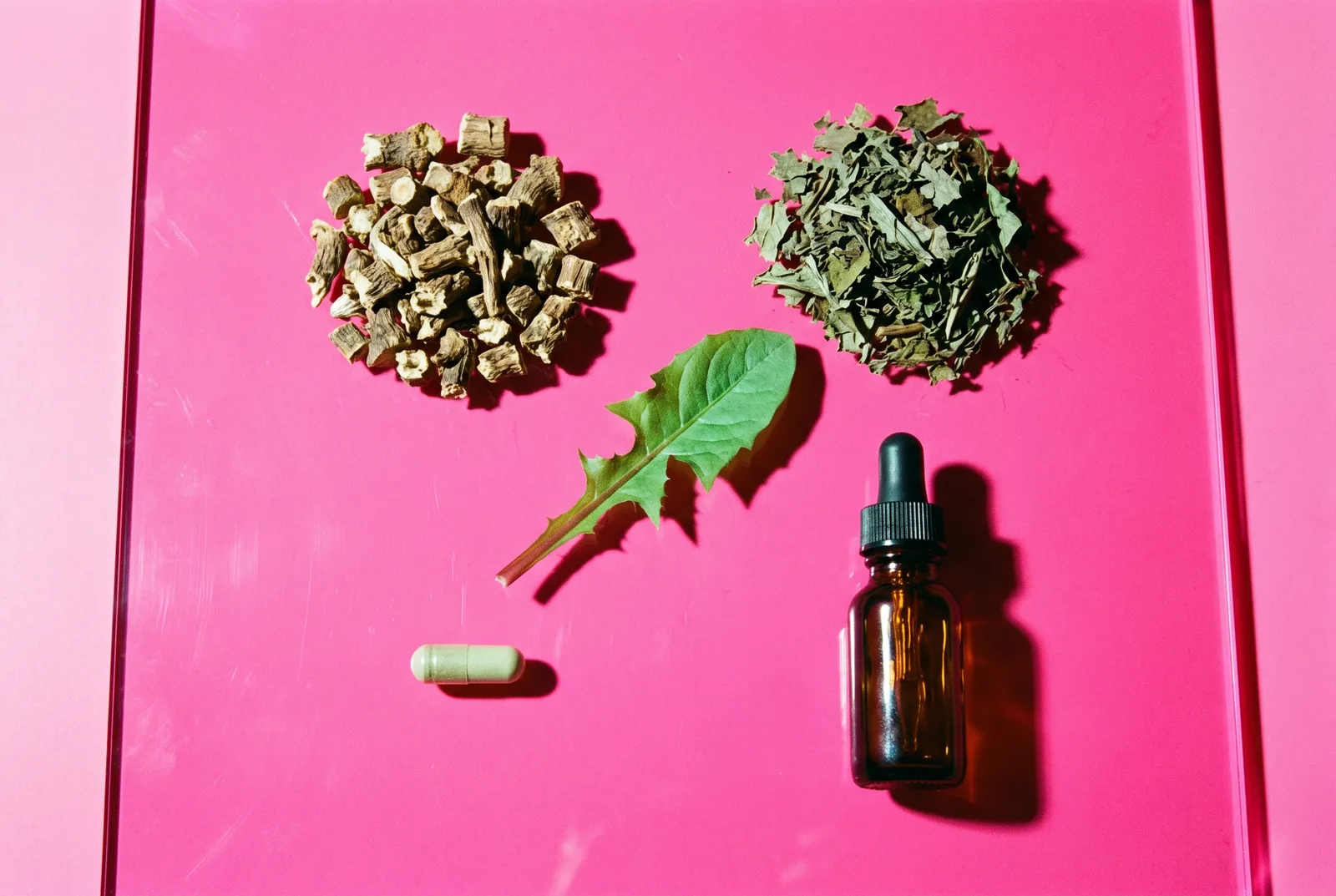
Dandelion (Taraxacum officinale) is a common lawn weed used as a bitter tea, a roasted-root coffee substitute, a salad green and a supplement. Its reputation for digestion, liver support and fluid balance rests mainly on traditional use. The only human trial was a small pilot of leaf extract, which increased urination over a single day. Nearly everything else comes from lab and animal studies, so its effects in people remain largely untested.
Start here



Dandelion FAQ
Is dandelion a diuretic?
Possibly, but the evidence is thin. A small pilot study in 17 healthy adults found that a liquid leaf extract increased how often they urinated after the first two of three doses in a single day. It had no control group and did not test root, so it does not settle the question.
How much dandelion root should I take?
No trial has established a dose. The only human study used 8 mL of a fresh leaf extract three times in one day. Root capsules are commonly sold at about 500 to 1,800 mg a day, but those figures reflect the market, not research. Follow the label and ask a clinician if you take medication.
What are the side effects of dandelion?
A federal drug-safety monograph lists rare allergic reactions, diarrhea and general stomach upset, without giving a rate. The root is naturally high in inulin, a fermentable fiber that can cause gas or loose stools in some people. Long-term daily use has not been tested in trials, so safety over months is unknown.
Is dandelion good for the liver?
Evidence in people is lacking. Rat studies of chemically induced liver injury found that root extract lowered liver-enzyme and oxidative-stress markers, but that is animal work in a disease model. Traditional use for liver and digestion rests on generations of practice rather than clinical trials. Dandelion should not be treated as a liver remedy.
Who should avoid dandelion?
People with kidney disease, gallbladder disease, a blocked bile duct, or an allergy to ragweed, daisies, chrysanthemums or marigolds should talk to a doctor first. The same goes for anyone pregnant, nursing, or taking diuretics or drugs for blood pressure, diabetes or blood clotting. Dandelion also contains a fair amount of potassium.