Topic · Herb
Ashwagandha
Ashwagandha is the root of Withania somnifera, a nightshade-family shrub with a long history in Ayurvedic practice. Modern trials, mostly small and often using branded extracts, suggest modest effects on anxiety and stress scores, cortisol, sleep and strength. Results vary widely between studies, and no effective dose is established. Short-term safety looks reassuring, but rare liver injury and thyroid effects are documented, and product potency often differs from the label.
Start here

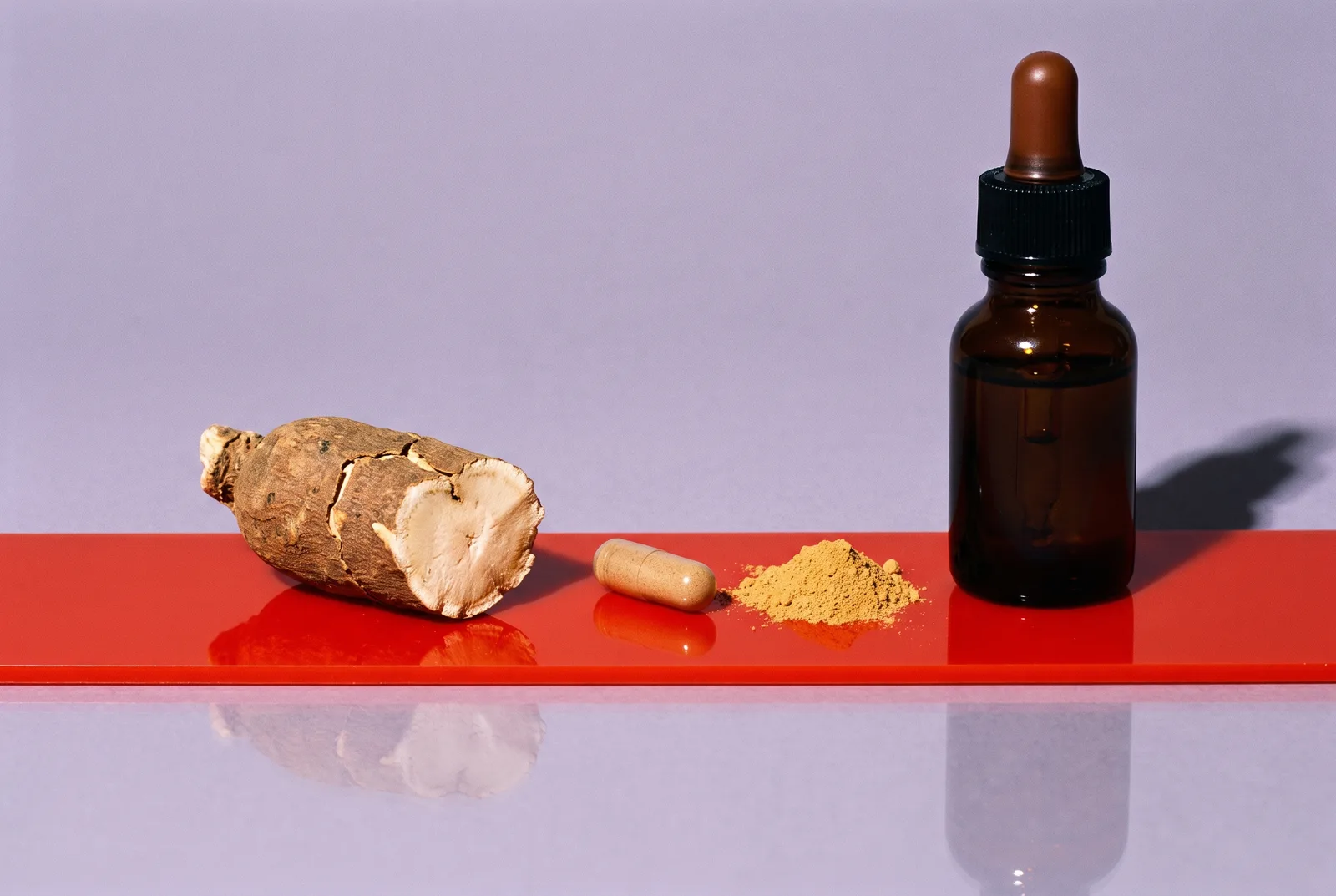
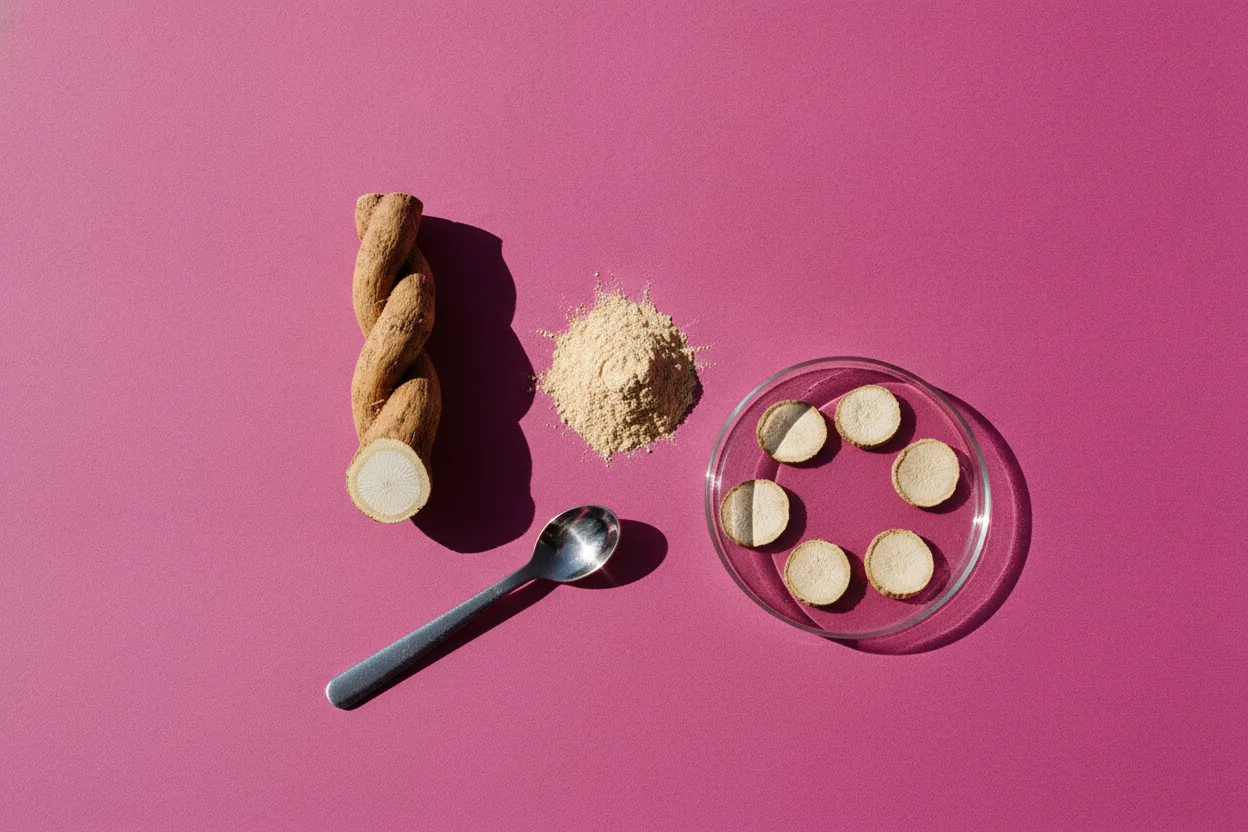
Ashwagandha FAQ
Does ashwagandha reduce stress and anxiety?
Probably modestly, but the evidence is uneven. A 2026 meta-analysis of 22 trials found large average improvements in anxiety, stress and depression scores, yet called the evidence heterogeneous with no established dose. A 2025 meta-analysis found lower cortisol versus placebo but no significant effect on self-reported perceived stress in a matched analysis of six trials.
What dose of ashwagandha is used in studies?
A review of 23 trials found standardized root extract at 125–600 mg/day was generally well tolerated. Trials using plain root powder went much higher, 5–6 g/day, and had no placebo group. Extract and powder milligrams are not interchangeable. Lab testing of 24 products also found withanolide content off from the label by 2x to 35x.
Is it safe to take ashwagandha every day?
For weeks to a couple of months, mostly yes. A review of 30 human trials reported no serious adverse events, with drowsiness, stomach discomfort and loose stools the most common effects. Rare liver injury has been reported, including at 1,350 mg/day for six months. Case reports cannot show how often it happens. Stop and see a doctor for jaundice, dark urine, itching or pain under the right ribs.
Who should avoid ashwagandha or ask a doctor first?
Anyone pregnant, nursing, under 18, or with liver disease should ask a doctor first. The same goes for people with thyroid conditions, since 600 mg/day shifted TSH, T3 and T4 versus placebo in one trial. Sedatives and immunosuppressants are plausible concerns based on mechanism. A chart review also linked combinations with four antidepressants to side effects.
Does ashwagandha help sleep or raise testosterone?
The evidence is early. An 8-week trial of 80 adults found improved sleep measures versus placebo, more so in people with insomnia. A 2026 meta-analysis of 20 trials found a small testosterone increase and greater muscle strength, mainly in physically active people, with no effect on body weight or fat. Neither result is a treatment claim.