Ashwagandha
How to choose ashwagandha: forms, labels, testing and price
Most of what separates one ashwagandha product from another is printed on the label: the form, the amount per day, and whether anyone verified it. Here is how to read it.
By Artifact Editors, Editorial team
Published · 7 min read
In this article
Start with the form: root powder or extract
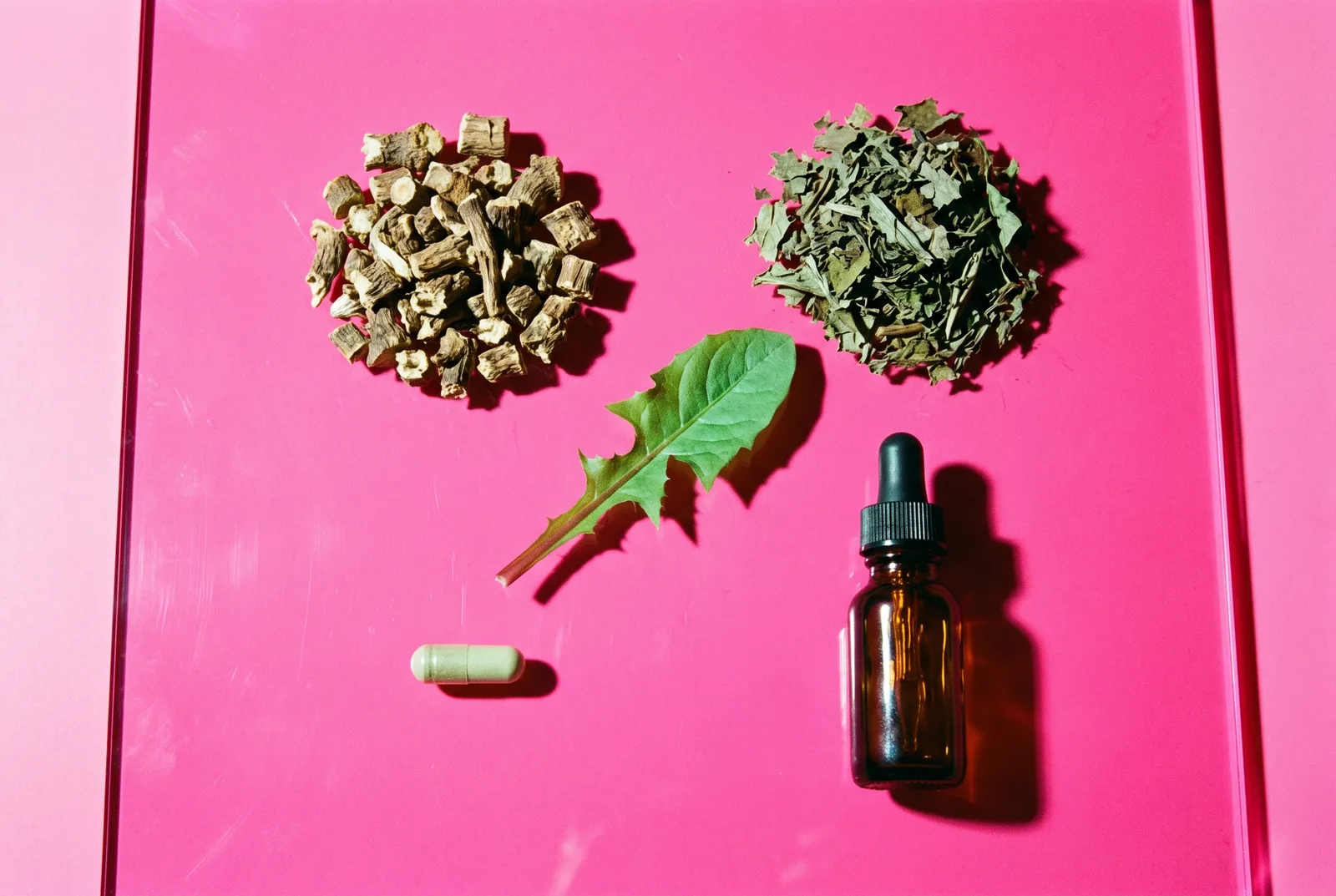
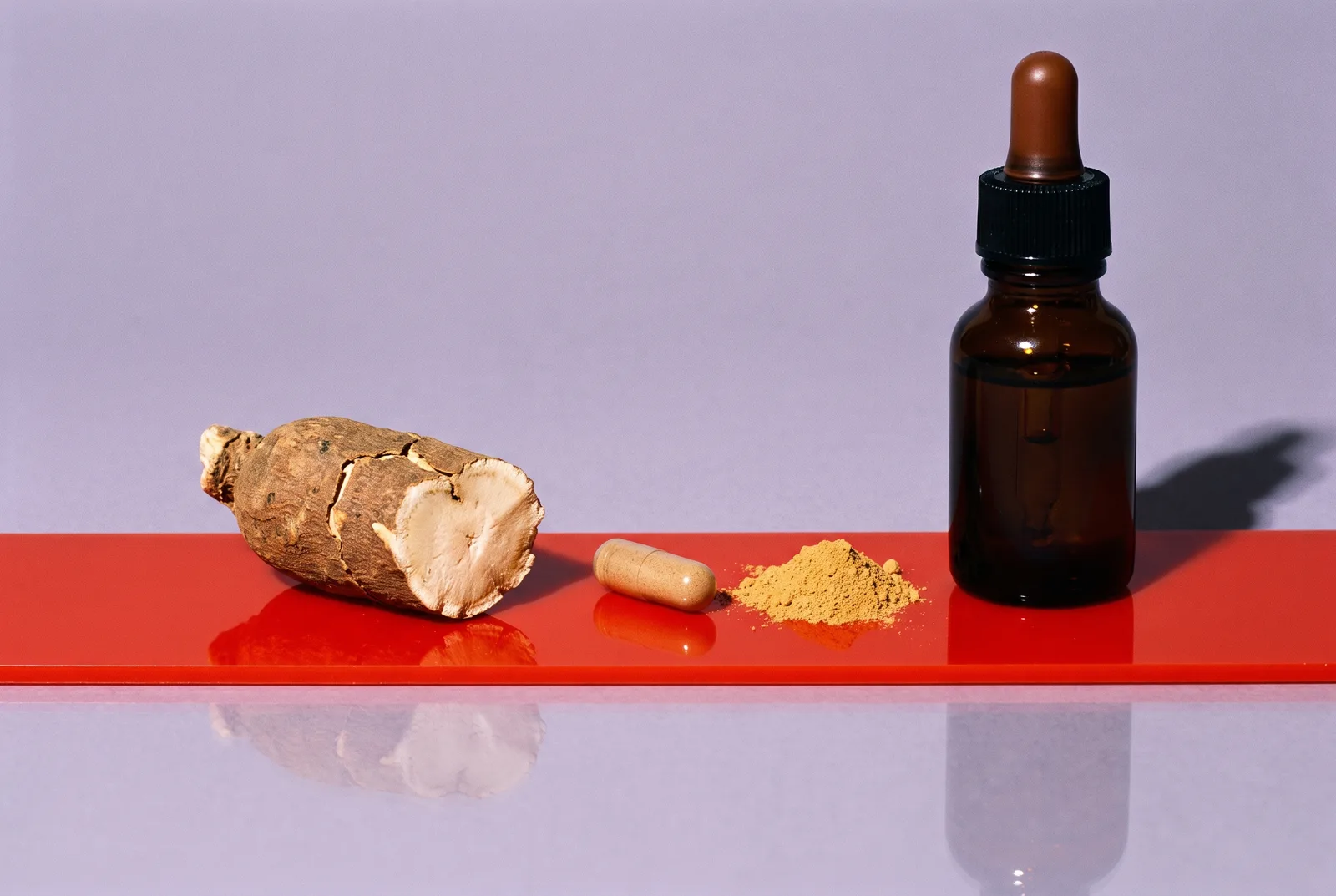
The word 'ashwagandha' on a bottle can mean two different materials. One is whole root powder: dried root, ground, with nothing concentrated or removed. The other is a standardized extract, processed to concentrate the root's withanolides and labeled to a stated percentage.
The difference is large enough to change what a milligram means. An 8:1 extract, for example, carries roughly eight times the concentration of the same weight of root powder. A 600 mg extract capsule and a 650 mg root powder capsule are not interchangeable products.
Extracts also come in sub-types. Some are root-only, and others blend root and leaf. Several branded extracts exist (KSM-66, Sensoril and Shoden are the common names), and a label that names one is telling you which raw material it used, not which company made the finished product. No trial we reviewed compares root-only against root-and-leaf extracts head to head, so neither can be called better on evidence.
| Form | Doses used in trials | What to know when buying |
|---|---|---|
| Whole root powder | 5-6 g/day, in small studies of specific populations, no placebo arm | Weight is exact, but potency is not standardized; verify with testing |
| Unbranded 8:1 extract | Escalated to 1,250 mg/day over 30 days in 18 healthy adults | Ask what the ratio and plant part are |
| Root-and-leaf extract | 225-400 mg/day for 30 days in healthy adults | Label should say leaf is included |
| Low-dose standardized extract | 21 mg/day of withanolide glycosides in overweight men | Dose is given as the active compound, not the whole capsule |
The trial doses above come from different studies with different designs, populations and outcomes: an 8:1 extract tested for tolerability, a root-and-leaf extract in people with perceived stress, a low-dose extract in overweight men, and root powder in infertile men and in older men with insomnia. The gap between 21 mg and 6,000 mg reflects concentration, not a finding that one form works at a lower amount. For a fuller side-by-side, see this comparison of ashwagandha forms.
Why the printed number may not be the real number
A withanolide percentage looks like quality control. It is only as reliable as the testing behind it. A 2025 mass-spectrometry analysis of 24 commercial ashwagandha products, 19 extracts and 5 root powders, found measured withanolide content differed from the label by a factor of 2 to as much as 35 (PMID 39965076).
That was an observational lab survey, not a ranking of brands, and it does not tell you which products were accurate. What it does establish is that a confident percentage on a label is a claim, not a measurement. A product that prints no percentage at all gives you less to check but also less that can be wrong, which is a point about honesty, not potency.
Capsules, powders, liquids and gummies
No trial we reviewed has tested ashwagandha gummies, liquid drops, liposomal products or tea against a standard capsule. The research base is capsules, tablets and plain powder. So the format question mostly reduces to a label question: what material is in it, and how much per day?
- Capsules and tablets: the closest match to what was studied. The label states milligrams per capsule, and directions state how many to take.
- Loose powder: the same plant material without the shell, usually stirred into milk or water. Dose depends on how accurately you measure, and a kitchen scale beats a scoop because powder density varies.
- Liquid drops and tinctures: flexible dosing, but only useful if the label gives milligrams per drop or per milliliter. Without that figure, you cannot compare it to anything.
- Liposomal products: 'liposomal' describes a delivery method. A small trial of a low-dose liposomal root-and-leaf extract showed benefits on some cognitive and mood measures versus placebo, but we found no human study showing it raises blood levels of ashwagandha compounds more than a capsule.
- Gummies: the gummy shape does not change the ingredient, but it brings added sugar or sugar alcohol, and many products need two to four gummies to reach the stated dose. That stated dose is often lower than the amounts studied.
- Tea: root steeped in hot water or milk has no standard strength and no trial of its own.
If you want the gummy question in more depth, this guide to ashwagandha gummies covers what to check on those labels.
Label red flags
Most of these take thirty seconds to spot once you know to look.
- No plant part named. Root, leaf and root-and-leaf are different raw materials. 'Ashwagandha extract' alone is incomplete.
- A proprietary blend. If individual amounts are not broken out, you cannot tell how much ashwagandha you are getting, and outside testing of the blend will not tell you either.
- A percentage with no certificate of analysis. Given the 2x to 35x discrepancies above, treat an unsupported withanolide figure with caution.
- A serving size that differs from the directions. A bottle of 60 one-capsule servings taken twice daily lasts 30 days, not 60.
- Milligrams without a form. 'Contains 1,000 mg' is meaningless until you know whether it is powder or a concentrate.
- Disease claims. A supplement label that says it treats or prevents a medical condition is making a claim the evidence does not support.
- 'Clinically studied' with no detail. Check whether the product matches the form and dose of the trial it implies. Note also that some trials, such as a 75-day hair and skin study, are manufacturer-funded.
What third-party testing does and does not tell you
'Third-party tested' is not one thing. Different marks verify different claims, and a label can carry one without the others.
- Certificate of analysis (COA): a lab report for a specific batch covering identity, contaminants such as heavy metals and microbes, and, for an extract, whether the stated withanolide percentage matches. It is the most direct evidence, but only if it is batch-specific and available to you.
- Sport banned-substance screening: checks finished products against a prohibited-substance list. It matters mainly to tested athletes and says little about potency.
- Monograph verification: checks an ingredient against a published identity and purity standard.
- USDA organic certification: verifies how the plant was grown and handled, not what is measured in the capsule.
Two things are easy to confuse. 'Made in a GMP facility' describes manufacturing practice, not what is in your bottle. And 'organic' is not 'tested.' A product can be organic with unverified potency, or tested without being organic.
To check a seal, confirm it against the issuing organization's own public database. A logo you cannot verify is a claim, not proof. If a brand does not publish a COA, you can ask for one, and a refusal or vague answer is itself information. This explainer on third-party testing walks through the common seals in more detail.
Price per effective dose, honestly calculated
Start with price per day at the label's directions, not price per bottle or per capsule. Divide the bottle price by the number of days it covers. As an illustration with made-up numbers, a $24 bottle of 60 capsules taken twice daily lasts 30 days and costs $0.80 a day. A $20 bottle of 60 capsules taken three times daily lasts 20 days and costs $1.00 a day.
Then ask what that daily amount actually is. This is where 'effective dose' gets slippery. A 2026 meta-analysis of 22 trials found large average improvements in anxiety, stress and depression scores, but called the evidence heterogeneous and said an effective dose has not been established (PMID 41644067). So there is no verified dose to price against. What you can do is compare your daily amount to what trials used, by form.
Extract trials commonly used 600 mg/day, for example in adults with chronic stress, over about 8 weeks. Root powder studies used 5-6 g/day. At 650 mg per capsule, 5 g of root powder is nearly eight capsules a day, which changes the cost math considerably. A cheap root powder product at 1.3 g/day sits far below the root powder studies, and a cheap extract at 100 mg/day may sit below extract trials too.
Safety checks before you buy
Across 30 human trials of root preparations, no serious adverse events were reported, and the most common effects were mild drowsiness, stomach discomfort and loose stools (PMID 32201301). A 2026 review of 23 trials found standardized extract at 125-600 mg/day generally well tolerated (PMID 42198398).
Rare liver injury has been reported, though. Case reports describe a man taking 1,350 mg/day for six months and another case at 450 mg for 45 days, plus a 22-year-old who developed injury within about 30 hours; the first two cases resolved after stopping. Case reports cannot establish how common this is, and they cannot tell you whether a contaminated or mislabeled product played a role. Still, they are a reason to stop and call a clinician if you develop yellowing of the skin or eyes, dark urine or unusual fatigue.
Talk to a doctor or pharmacist before buying if you are pregnant or nursing, take thyroid medication, sedatives or immune-suppressing drugs, or take antidepressants. A chart review of adverse-event reports linked ashwagandha combined with four different antidepressants to a range of side effects (PMID 37829299). It is observational, but it is enough to ask first. More topics are collected on our ashwagandha hub.
A short checklist
- Identify the form: root powder, root extract or root-and-leaf extract.
- Find the daily amount in the directions, not only in the panel.
- Check for a proprietary blend, unstated plant part or unexplained percentage.
- Ask for a batch-specific COA and verify any seal.
- Calculate price per day, then compare the daily amount with trial doses for that form.
- Skim the other ingredients, including sugar in gummies and any capsule shell you want to avoid.
Frequently asked questions
Is ashwagandha root powder better than extract?
Neither has been shown to be better. They are different materials studied in separate trials at doses that do not overlap, roughly 21-1,250 mg/day for extracts and 5-6 g/day for powder. The more useful question is whether the label states the form, the plant part and the daily amount clearly.
Do ashwagandha gummies work as well as capsules?
Unknown. No trial has tested gummies or compared them with capsules. A gummy with an accurately labeled amount of the same material delivers the same ingredient, but many need several pieces for the stated dose, and they add sugar or sugar alcohol.
Can I trust a withanolide percentage on the label?
Not without supporting documentation. A 2025 lab analysis of 24 products found measured content differed from the label by 2x to 35x. A batch-specific certificate of analysis from an independent lab is the way to check whether a printed number holds up.
Does liposomal ashwagandha absorb better?
No published human study we reviewed shows that it does. Liposomal describes how the material is packaged, not how much reaches the bloodstream. Judge the product by its stated form, milligrams per day and testing, rather than by the delivery claim.
Is a higher milligram count always better?
No. Milligrams mean different things for root powder and for concentrated extracts, and a higher number can cost more per day. Compare the form, the daily amount in the directions, and how closely both resemble what trials have studied.
Sources (15)
- Zellner L, et al. Determination of Withanolides and Withanosides in Ashwagandha Based Products Using HPLC-Drift-Tube-Ion-Mobility Quadrupole Time-of-Flight Mass Spectrometry. Electrophoresis. 2025.
- Alsanie SA, et al. Effects of ashwagandha (Withania somnifera) on mental health in adults: A systematic review and dose-response meta-analysis of randomized controlled trials. Complement Ther Med. 2026.
- Raut AA, et al. Exploratory study to evaluate tolerability, safety, and activity of Ashwagandha (Withania somnifera) in healthy volunteers. J Ayurveda Integr Med. 2012.
- Remenapp A, et al. Efficacy of Withania somnifera supplementation on adult's cognition and mood. J Ayurveda Integr Med. 2022.
- Lopresti AL, et al. A Randomized, Double-Blind, Placebo-Controlled, Crossover Study Examining the Hormonal and Vitality Effects of Ashwagandha ( Withania somnifera) in Aging, Overweight Males. Am J Mens Health. 2019.
- Mahdi AA, et al. Withania somnifera Improves Semen Quality in Stress-Related Male Fertility. Evid Based Complement Alternat Med. 2011.
- Atul U, et al. Efficacy of Brimhana Nasya and Ashwagandha (Withania somnifera (L.) Dunal) root powder in primary insomnia in elderly male: A randomized open-label clinical study. Ayu. 2020.
- Chandrasekhar K, et al. A prospective, randomized double-blind, placebo-controlled study of safety and efficacy of a high-concentration full-spectrum extract of ashwagandha root in reducing stress and anxiety in adults. Indian J Psychol Med. 2012.
- Leonard M, et al. Acute and Repeated Ashwagandha Supplementation Improves Markers of Cognitive Function and Mood. Nutrients. 2024.
- Jillella A, et al. A Prospective, Randomized, Double-Blind, Placebo-Controlled Clinical Study of Efficacy and Safety of Ashwagandha Root Extract Capsule on Skin and Hair Health in Healthy Adults. Phytother Res. 2026.
- Tandon N, et al. Safety and clinical effectiveness of Withania Somnifera (Linn.) Dunal root in human ailments. J Ethnopharmacol. 2020.
- Coope OC, et al. Back to the Roots: Safety and Tolerability of Standardised Ashwagandha (Withania somnifera) Root Extract in Healthy Adults-A Systematic Review of Biomarkers and Adverse Events. Pharmaceuticals (Basel). 2026.
- Bokan G, et al. Herb-Induced Liver Injury by Ayurvedic Ashwagandha as Assessed for Causality by the Updated RUCAM: An Emerging Cause. Pharmaceuticals (Basel). 2023.
- Almuzghi F, et al. Ashwagandha-Induced Hepatic Injury: A Case Report. Cureus. 2024.
- Siwek M, et al. Harder, better, faster, stronger? Retrospective chart review of adverse events of interactions between adaptogens and antidepressant drugs. Front Pharmacol. 2023.
Adapted from research by the Electric Tiger editorial team — read the original.