Topic · Mineral
Zinc
Zinc is an essential trace mineral that works as a cofactor for hundreds of enzymes and supports immune function, growth, and DNA and protein synthesis. Most adults get it from food, especially oysters, red meat and poultry. Its best-tested supplement use is high-dose lozenges, which modestly shortened colds in trials. Evidence for mood, skin, blood sugar and sleep is mixed or thin. Sustained intake above the upper limit can deplete copper.
Start here

Zinc FAQ
How much zinc should I take a day?
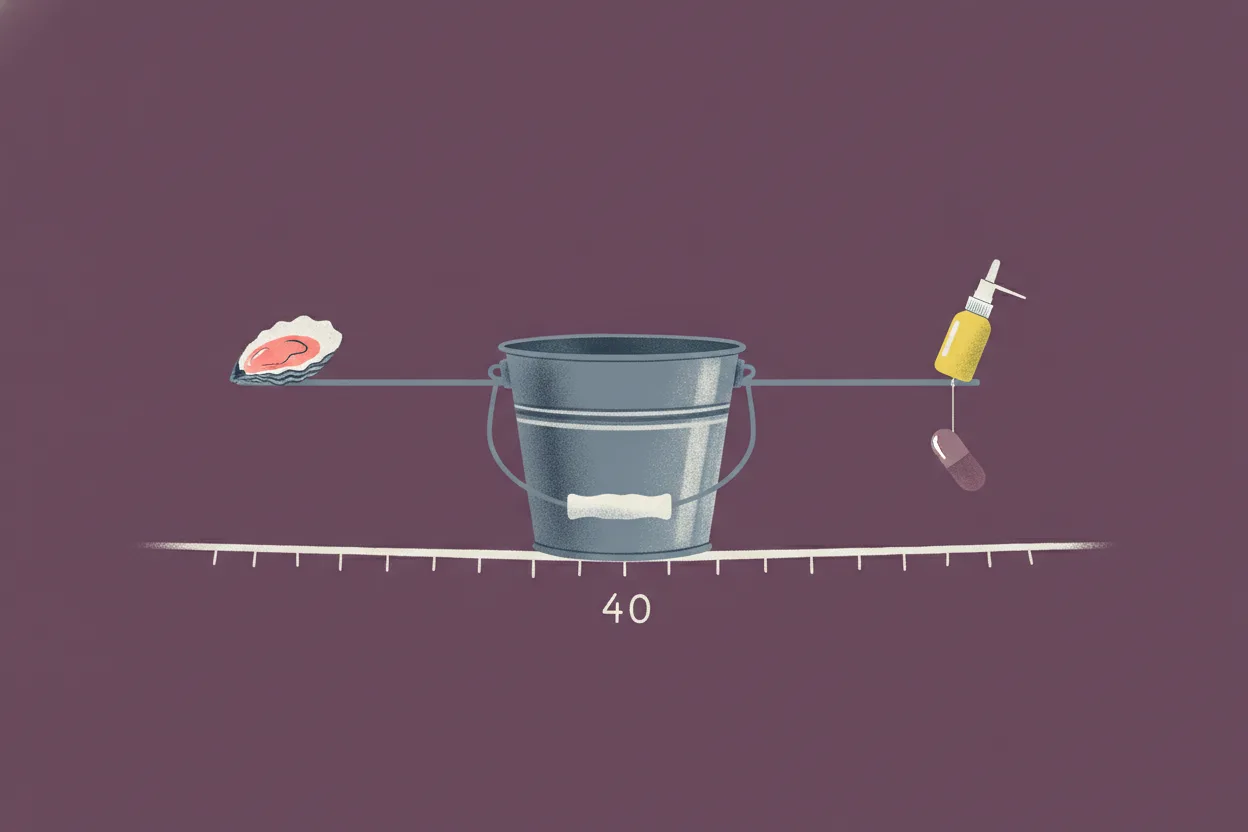
The adult RDA is 11 mg/day for men and 8 mg/day for women, counting food and supplements together. The upper limit is 40 mg/day from all sources combined. Most people get several milligrams from diet, so a supplement need not cover the whole amount. Check the elemental zinc figure on the Supplement Facts panel, not the compound weight.
Does zinc help with colds?
Partly. A 2013 review of 16 trials found lozenges started within a day of symptoms shortened colds by about a day, but only at 75 mg/day or more. A 2017 analysis of 7 trials found colds about a third shorter at 80–207 mg/day. Nausea and bad taste were more common, and these doses exceed the daily upper limit.
Which form of zinc is absorbed best?
No form has been proven best for health outcomes. Small trials suggest bisglycinate beat gluconate by about 43% in 12 women, citrate and gluconate matched each other and beat oxide, and gluconate beat sulfate in 8 adults. These studies are small, and one review came from a manufacturer's team, so treat the differences cautiously.
Can you take too much zinc?
Yes. A single large dose can cause nausea, vomiting, cramps, diarrhea and headache. Sustained intake matters more: 50 mg/day for six weeks lowered a copper-dependent enzyme's activity in healthy men. A case series linked years of heavy zinc denture-cream use to copper deficiency and serious nerve damage in four patients.
Should I take zinc with food or on an empty stomach?
Absorption is generally somewhat higher on an empty stomach, but nausea is common, so taking it with a meal is the usual advice if it upsets you. No trial shows morning or night works better. Separate it from iron or calcium supplements by a couple of hours, and ask a pharmacist about quinolone or tetracycline antibiotics.