Magnesium baths
Does a magnesium bath help you sleep?
We found no trial of magnesium baths for sleep, so the bath itself is unproven, while oral magnesium has small, mixed evidence.

By Artifact Editors, Editorial team
Published · 3 min read

In this article
What the sleep research actually tested
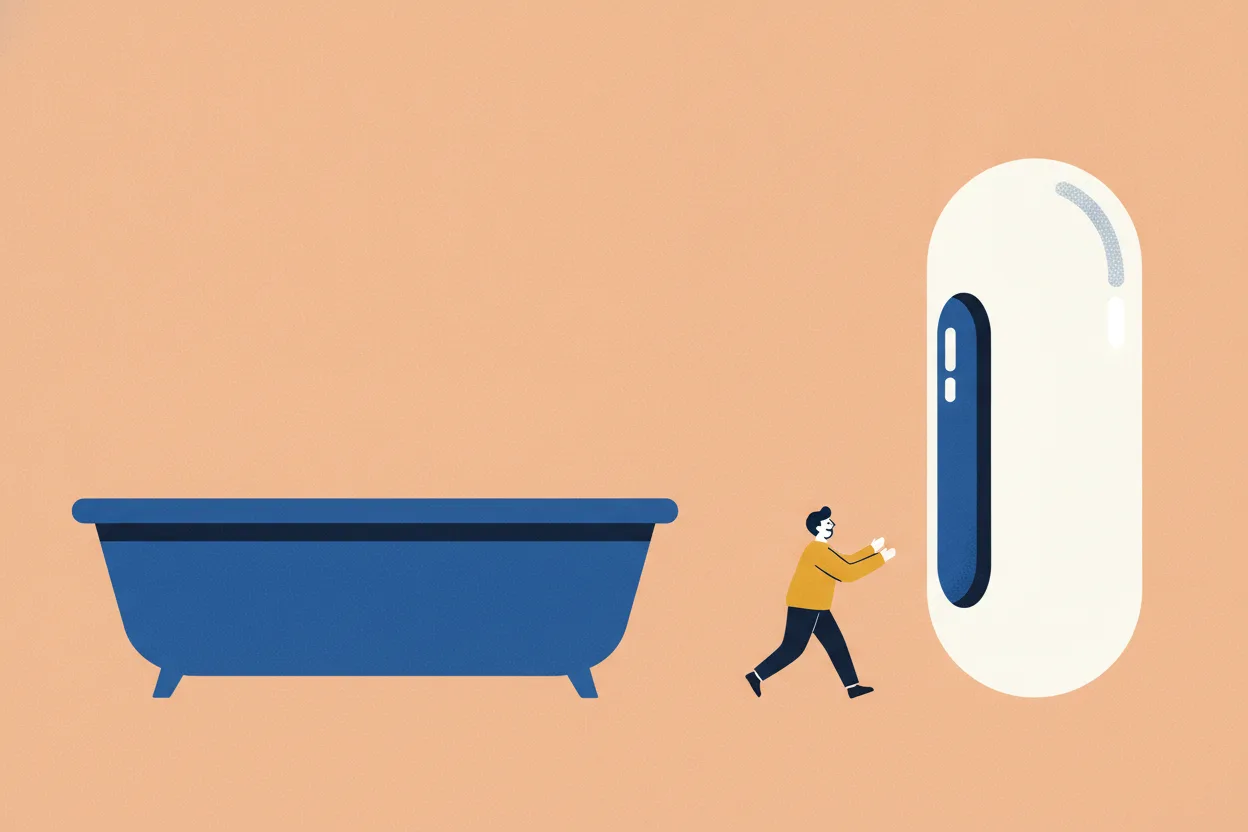
We found no randomized trial or systematic review that tested a magnesium bath for sleep. Every sleep study we located gave magnesium by mouth, in forms such as oxide, citrate, bisglycinate, L-threonate, and aspartate (Lopresti et al., 2026 systematic review). That gap matters, because a bath and a pill deliver magnesium by completely different routes.
The newest systematic review of randomized trials found that oral magnesium may modestly help some subjective sleep measures in some adults. Results were inconsistent, certainty was low or very low, and the authors called for adequately powered trials. We saw only the abstract, so we cannot report pooled effect sizes.
Can magnesium get through your skin?
Probably not in amounts that matter for sleep, and we found no human study that measured absorption from Epsom salt. Examine says the evidence that magnesium sulfate crosses the skin is lacking, and that a warm soak may relax you without magnesium doing the work (Examine magnesium profile).
A Mayo Clinic physician also judged transdermal absorption to be low or inefficient, and advised against sprays and gels for sleep (Mayo Clinic Press on magnesium for sleep). A critical review of transdermal magnesium says marketing claims of near-complete absorption outrun the data (Myth or Reality: transdermal magnesium). We read only its introduction, so treat that as a partial picture.
What the skin-care guidance covers
Dermatology bathing guidance is about skin conditions, not sleep. For psoriasis, one review cites about two cups of Epsom salt in warm water, with soaks no longer than 15 minutes daily (Bathing practices in dermatology).
The same review says no study shows Epsom salt baths improve skin barrier function, unlike a 2005 study of Dead Sea salt. It also warns against prolonged soaking because of irritation. None of that is sleep evidence, and we would not present it as such.
What the oral trials show
Bottom line: the oral evidence is small, mixed, and modest at best. It is the closest proxy we have, and it still does not prove much.
The largest single trial we found was a 2025 German double-blind study of 155 adults with self-reported poor sleep. They took 250 mg elemental magnesium as bisglycinate or placebo daily for four weeks. The Insomnia Severity Index fell 3.9 points in the magnesium group versus 2.3 with placebo (p = 0.049, Cohen's d = 0.2) (Schuster et al., magnesium bisglycinate trial).
That effect is small, and the authors wanted objective sleep measures and longer trials. A 2024 Cureus review found most included trials were small, with varied doses and durations. It judged supplementation likely useful for mild insomnia while also calling for larger RCTs (Rawji et al., Cureus).
Examine reports that recent reviews found magnesium may shorten sleep latency by about 17 minutes, but it calls the evidence too weak for firm recommendations (Examine). We could not verify that figure against the primary meta-analysis, so we treat it as unconfirmed.
If you want to try it, here is the sensible version
Bottom line: enjoy the bath as a warm soak, and do not count on it for magnesium. If you want to test magnesium for sleep, the oral route has the evidence, and it is worth a conversation with a clinician first.
- Harvard's clinician-sourced guidance starts at 100 to 200 mg, taken one to two hours before bed (Harvard Health).
- A Mayo Clinic physician suggests 250 to 500 mg as a single bedtime dose, provided kidney function is healthy.
- Examine and Cleveland Clinic both cite 350 mg daily as the supplemental upper intake level, with side effects more likely above it (Examine FAQ, Cleveland Clinic).
For the bath basics, see our magnesium baths guide.
Frequently asked questions
Does Epsom salt absorb through the skin?
We found no human data measuring magnesium absorption from an Epsom salt bath. Examine says the evidence that magnesium sulfate crosses the skin is lacking, and a Mayo Clinic physician judged transdermal absorption to be low. Until someone measures it, treat skin absorption as unproven.
How much magnesium should I take for sleep?
Harvard's clinician-sourced guidance starts at 100 to 200 mg, one to two hours before bed. A Mayo Clinic physician suggests 250 to 500 mg if kidney function is healthy. The supplemental upper limit cited by Examine and Cleveland Clinic is 350 mg daily, so check with a clinician before going higher.
Is a warm bath good for sleep?
The research we found does not test warm baths for sleep directly. Warmth may help you relax, and Examine notes a warm soak may relax people without magnesium contributing. Dermatology guidance on Epsom soaks suggests keeping them to 15 minutes or less.
Sources (11)
- Lopresti AL et al., "Magnesium Supplementation for Sleep in Adults: A Systematic Review of Randomized Controlled Trials," J Diet Suppl, 2026
- Schuster J et al., "Magnesium Bisglycinate Supplementation in Healthy Adults Reporting Poor Sleep: A Randomized, Placebo-Controlled Trial," Nat Sci Sleep, 2025
- Examine, "Magnesium benefits, dosage, and side effects"
- Mayo Clinic Press, "Magnesium for Sleep: Benefits and Guide"
- "Myth or Reality—Transdermal Magnesium?"
- "Bathing Practices in Dermatology: Uses and Implications for Patient Management," PMC
- Rawji A et al., "Examining the Effects of Supplemental Magnesium on Self-Reported Anxiety and Sleep Quality: A Systematic Review," Cureus, 2024
- Harvard Health, "Melatonin or magnesium: Can either supplement help you sleep?"
- Examine, "Does magnesium help with sleep?"
- Cleveland Clinic, "Magnesium for Sleep: Does It Really Work?"
- Morris ME et al., "Absorption of magnesium from orally administered magnesium sulfate in man," J Toxicol Clin Toxicol, 1987