Lip masks
Do lip masks actually help dry lips?
No study tests lip masks as a category, but the evidence for thick occlusive balms suggests they are a reasonable choice for very dry lips.

By Artifact Editors, Editorial team
Published · 3 min read
In this article
What a lip mask actually is
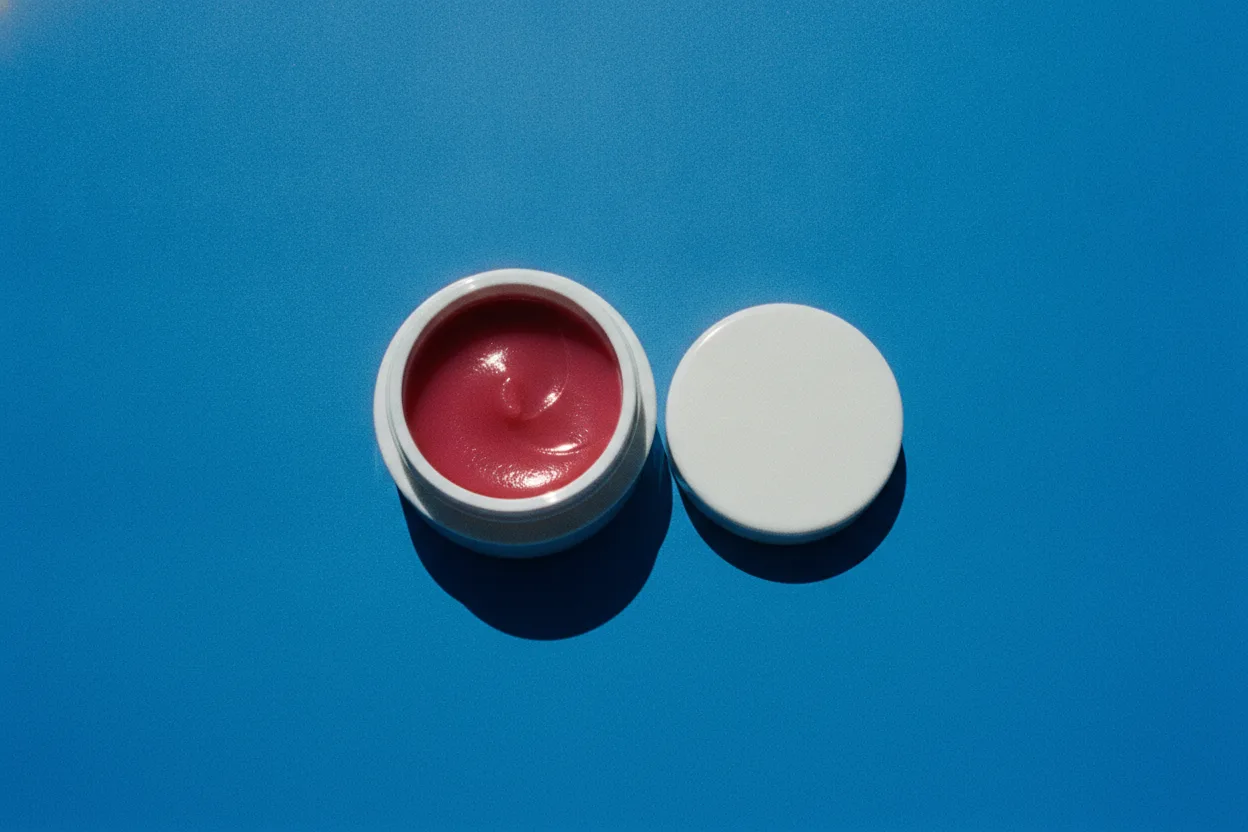
Lip mask is a marketing term, not a clinical one. We found no trial or guideline that defines it or compares it with a standard balm.
In practice, many lip masks are thicker balms meant to be left on longer. That is our inference from the ingredient guidance, not a tested claim, so the useful question is what the product is made of.
What dermatologists and NIH sources recommend
The short answer is a thick, fragrance-free occlusive. The American Academy of Dermatology advises a non-irritating balm several times a day and before bed, and for very dry, cracked lips it suggests a thick ointment such as white petroleum jelly, because ointments hold water in longer than waxes or oils AAD guidance on healing chapped lips.
The AAD page says visible improvement should show within two to three weeks. That is an expert tip, not a measured outcome. NIH's MedlinePlus lists beeswax or petrolatum for chapped lips MedlinePlus on chapped lips, and the StatPearls chapter on cheilitis names petroleum jelly as helpful while advising you to stop lip-licking StatPearls on cheilitis.
| Ingredient | What the sources say |
|---|---|
| Petrolatum or petroleum jelly | Recommended by AAD, MedlinePlus, StatPearls and Cleveland Clinic |
| Camphor, eucalyptus, menthol | Avoid; Cleveland Clinic says they can dry and irritate skin |
| SPF 30 or higher | Cleveland Clinic suggests it for time outdoors, reapplied about every two hours |
What the trial data shows
The evidence is thin. The only randomized result we found is a trial of a lip cream against untreated controls, in women aged 18 to 55 with moderate to severe lip dryness on a 9-point scale. Dryness fell more in the treated group by day 8, with an adjusted mean difference of -1.48 (95% CI -2.24 to -0.71). No adverse events were recorded lip cream trial.
What the daily routine and sun protection add
Routine matters as much as the product. A review of lip-licking dermatitis recommends a bland, non-irritating balm with UV protection, adequate hydration and protection from harsh weather practical interventions in lip-licking dermatitis.
Cleveland Clinic suggests SPF 30 or higher for time outdoors, reapplied about every two hours, and recommends ointment-based balms with petrolatum, glycerin or mineral oil Cleveland Clinic on chapped lips. Whether SPF matters for indoor overnight use was not addressed in the sources we reviewed.
What label claims can and can't tell you
Lip products with petrolatum at the monograph-recognized concentration may claim temporary prevention of dryness and relief of chapping. Products with more than 30% petrolatum may also claim protection against wind and cold, according to a patent that quotes FDA rules USPTO patent filing.
That is a secondary source, so check the primary FDA monograph before relying on the exact numbers. Also note that a survey of 3,750 adults found higher lip dryness scores while wearing face masks, 2.62 against 1.72 on the study's scale, but that was self-reported and says nothing about lip products face mask survey.
For more on the category, see our lip masks topic page.
Frequently asked questions
Should I sleep with a lip mask on?
We found no study that tests overnight use of lip masks. The guidance we reviewed recommends a thick, fragrance-free balm before bed, which is close to the same idea. Stop if your lips sting or become more irritated.
Is petroleum jelly better than lip balm?
Sources we reviewed point to thick ointments like petroleum jelly for very dry, cracked lips because they hold water in longer than waxes or oils. No head-to-head trial compares them, so treat this as expert guidance rather than proven superiority.
Sources (8)
- 7 dermatologists' tips for healing dry, chapped lips — American Academy of Dermatology
- Chapped lips: MedlinePlus Medical Encyclopedia — NIH/NLM
- Cheilitis — StatPearls, NCBI Bookshelf NIH
- A series of in vitro and human studies of a novel lip cream formulation for protecting against environmental triggers of recurrent herpes labialis — PMC
- Art of prevention: Practical interventions in lip-licking dermatitis — PMC
- How To Get Rid of Chapped Lips: 6 Remedies — Cleveland Clinic
- Skin barrier protective delivery systems patent quoting FDA Skin Protectant Monograph; secondary source — USPTO
- COVID-19 Pandemic: Effect of Different Face Masks on Self-Perceived Dry Mouth and Halitosis — PMC