News
Kids who eat more ultra-processed food show stronger reward-brain response
A JAMA Network Open study of 46 children ties higher ultra-processed food intake to more activity in a reward-related brain region. It is small and observational, so it can't show cause.

By Artifact Editors, Editorial team
Published · 5 min read

In this article
What happened
Children who got more of their calories from ultra-processed foods (UPFs) showed stronger activity in a reward-related part of the brain when they looked at food cues. That is the headline finding of a study in JAMA Network Open, published online Oct. 23, 2026, as first reported by ScienceDaily · Health & medicine (ScienceDaily · Health & medicine).
ScienceDaily called it a "troubling brain response." The paper is more measured. Its own summary says the findings "suggest" reward-related brain responses "may contribute" to the link between UPF intake and adiposity.
The authors, led by Alves with senior author Kathleen A. Page, MD, are at the Keck School of Medicine of USC. The ScienceDaily item is a rewrite of the USC press release.
What the study actually found
The cohort was 46 healthy-weight children from the BrainChild study. Their mean age was 8.7 years, 57% were female, and 61% were Hispanic or Latino. Baseline assessments ran from April 2015 to June 2024.
Researchers estimated each child's habitual UPF intake as a percentage of total energy, using multiple 24-hour dietary recalls sorted with the NOVA classification. Then they scanned the children with fMRI while they viewed food cues. According to the press release, those were pictures of appetizing foods like cookies and French fries. Body measures were repeated a year later.
Models were adjusted for age, sex, baseline BMI and total calorie intake. The reported estimates are standardized effects per standard deviation, with 95% confidence intervals.
| Association | Standardized β (95% CI) |
|---|---|
| UPF intake → dorsal striatum response | 0.34 (0.07 to 0.61) |
| UPF intake → ventral striatum response | 0.16 (−0.14 to 0.46), not significant |
| Dorsal striatum response → one-year BMI gain | 0.32 (0.02 to 0.62) |
| Dorsal striatum response → one-year body fat % gain | 0.44 (0.15 to 0.72) |
| UPF intake → one-year waist circumference gain | 0.38 (0.11 to 0.66) |
| UPF intake → one-year BMI gain | 0.28 (0.00 to 0.57) |
| UPF intake → one-year body fat % gain | 0.29 (0.00 to 0.57) |
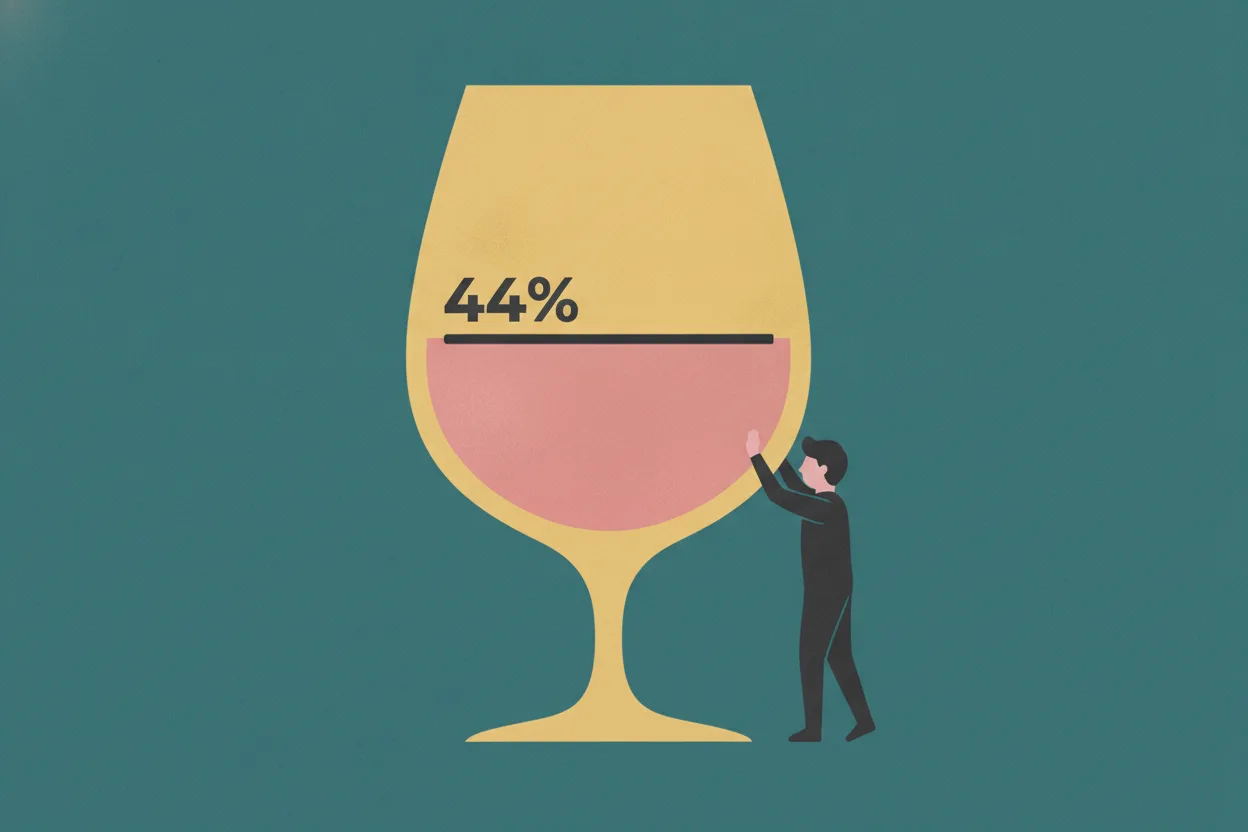
The authors also found that adding dorsal striatal response to the models shrank the UPF–BMI association by 31% and the UPF–body fat association by 44%. That comes from statistical adjustment. It doesn't mean the brain response explains that share of any weight gain.
What it does not show
Start with causality. The USC release itself says the study can't show that UPFs cause heightened brain activity or weight gain. We only know that the two travel together in these 46 kids.
An invited commentary in the same issue, from de Souza and Christoforou of McMaster University, adds more caution:
- Sample size: with 46 children, two variables of interest and five covariates, there were roughly 6 to 7 observations per parameter, below the commonly cited 10 to 15. The commentary says estimates may be exaggerated and need replication.
- Multiple outcomes: there were three primary outcomes and no correction for multiple testing, so single significant results deserve a careful read.
- Modeling choices: putting baseline BMI and BMI change in the same model can create artifacts such as regression to the mean.
- Calorie adjustment: holding total energy constant may remove a key pathway, since feeding trials show UPFs raise calorie intake. The paper tests UPF share of diet, not overeating.
- Added sugar: adjusting for it after the fact may change the question if sugar sits on the causal path.
The commentary also praised the diet assessment. Repeated 24-hour recalls with manual NOVA coding likely reduce misclassification compared with food-frequency questionnaires. Recalls are still self-reported, though, and this is a single research program with mostly Hispanic or Latino children. Our read draws on the paper's abstract and the commentary, not the authors' full limitations section.
What it means for you
This study is not a reason to panic, and it is not proof that a specific snack rewires a child's brain. It is a small, early signal that fits with other work and gives researchers something to test.
If you're a parent, the reasonable takeaway is modest. Notice how much of your kid's diet comes from packaged, heavily formulated foods, and see whether a few swaps toward minimally processed options are easy. No purge required, and this study doesn't say any particular amount is harmful.
If you're a young adult, note that the participants were 7 to 10 years old. The study didn't test adults, so we can't carry its brain findings over to you.
The next steps should be more informative. Page plans an intervention study in which children get more minimally processed foods. The BrainChild registration lists follow-up out to four years.
Context: a mixed evidence base
Earlier pediatric data are inconsistent. A Canadian cohort of 2,217 children, published in JAMA Network Open in 2025, found that high UPF consumption in early childhood was associated with obesity development, primarily in males. Its authors began from the point that findings among children are inconsistent.
The strongest evidence on calories comes from adults. In the 2019 NIH inpatient randomized trial by Hall and colleagues in Cell Metabolism, people ate about 500 kcal more per day (508 ± 106) on an ultra-processed diet than on an unprocessed one, and gained weight on it. That wasn't a children's study, and it didn't scan brains.
On the brain mechanism, results are mixed. A preprint of a PET study in 50 adults found no significant striatal dopamine response to a high-fat, high-sugar UPF milkshake, and responses were highly variable and unrelated to adiposity. It measured dopamine after eating rather than fMRI responses to pictures, so it doesn't directly contradict the new paper. It hasn't been peer reviewed either.
Policy is still catching up. HHS, FDA and USDA recently issued a joint request for information toward a federal UPF definition, noting there is currently no single authoritative definition for the U.S. food supply. The agencies estimate children get over 60% of their calories from foods often considered UPF, while the USC release cites about 67%. The figures use different sources and definitions.
Frequently asked questions
Does this study show ultra-processed food causes weight gain in kids?
No. It is a small observational study of 46 children and shows associations only. The USC release says it can't show that UPFs cause heightened brain activity or weight gain.
Which brain region was involved?
The dorsal striatum, a reward-related region. Higher UPF intake was associated with a stronger response there to food cues, but not in the ventral striatum.
Is the link between UPFs and BMI gain solid?
Not really. The UPF estimates for BMI and body fat gain had confidence intervals starting at zero. The clearest result was for waist circumference.
Should parents change what their kids eat because of this?
One small study isn't enough to justify drastic changes. Paying attention to how much of a child's diet is heavily processed, and making easy swaps, is a reasonable and low-risk approach.
Sources (10)
- ScienceDaily · Health & medicine: Kids who eat more ultra-processed foods show a troubling brain response
- Kids who eat more ultra-processed foods show a troubling brain response ScienceDaily, Nov 3, 2026; Keck School of Medicine of USC release
- Children who eat more ultra-processed foods show stronger brain responses to appetizing foods USC press release on EurekAlert
- Alves JM, et al. Ultraprocessed Food Intake, Striatal Response to Food Cues, and Adiposity Gain in Children. JAMA Netw Open 2026;910:e2640252 PRIMARY SOURCE
- de Souza RJ, Christoforou A. Ultraprocessed Foods, Neuroimaging, and Interpretation of Observational Evidence invited commentary. JAMA Netw Open 2026;910:e2640258
- Effects of Processed Foods on Brain Reward Circuitry and Food Cue Learning ClinicalTrials.gov NCT06165952
- Chen ZH, et al. Ultraprocessed Food Consumption and Obesity Development in Canadian Children PubMed record. JAMA Netw Open 2025;81:e2457341
- Hall KD, et al. Ultra-Processed Diets Cause Excess Calorie Intake and Weight Gain: An Inpatient Randomized Controlled Trial of Ad Libitum Food Intake. Cell Metabolism 2019
- Brain dopamine responses to ultra-processed milkshakes are highly variable and not significantly related to adiposity in humans medRxiv preprint
- HHS, FDA and USDA Address the Health Risks of Ultra-Processed Foods joint RFI announcement
As first reported by ScienceDaily · Health & medicine — read the original.