Retinol
Does retinol work for milia? What the research shows
No study tests retinol for milia. The closest evidence is a few tretinoin case reports, and most milia clear without treatment.

By Artifact Editors, Editorial team
Published · 3 min read

In this article
- The short answer: no retinol-specific evidence exists
- Milia usually clear on their own, and the standard fixes happen in the office
- Case reports suggest tretinoin can help, but the evidence is small
- Retinoids can also cause milia, which complicates the picture
- Where retinol itself stands
- What to do about milia right now
- FAQ
The short answer: no retinol-specific evidence exists
Short version: we found no clinical study, systematic review, or randomized trial testing retinol for milia, and no professional guideline that recommends it. If a product page claims otherwise, ask which study it cites, because we could not find one.
What we did find is thinner than most people expect. It is a few case reports on tretinoin, plus one reference that mentions retinoids in passing. Our search was limited, so treat this as a snapshot rather than a final word.
Milia usually clear on their own, and the standard fixes happen in the office
Bottom line first: milia are tiny keratin-filled cysts, and they often disappear within a few months without treatment. The DermNet NZ reference says treatment is generally considered only when they bother you [1].
The established options are clinical procedures: de-roofing with a sterile needle or blade, destruction by diathermy, curettage, or cryotherapy. For widespread lesions, DermNet lists topical retinoids as something that 'may be helpful,' but it does not tie that advice to trial data [1].
Case reports suggest tretinoin can help, but the evidence is small
Bottom line: tretinoin has the strongest signal, and it is still anecdotal. In one JAMA Dermatology report, an 18-year-old with eruptive milia on the upper chest had failed antibiotics and topical steroids, then responded quickly to tretinoin cream [2].
A pediatric case report described a 9-year-old boy whose milia formed inside an injured plaque on the elbow and knee. The lesions were treated with topical tretinoin because of their size, but the abstract gives no concentration or outcome detail [3].
The most specific result comes from a patient with plantar milia en plaque after bullous pemphigoid. Nightly 0.05% tretinoin cream produced near-complete clearance in about six months [4]. Even so, the authors of a separate milia en plaque review concluded that no standardized therapy exists and that retinoid results so far come from case reports [5].
Retinoids can also cause milia, which complicates the picture
Bottom line: oral retinoids are not a guaranteed fix, and they can produce milia. A 17-year-old taking 30 mg of isotretinoin daily developed about 20 milia on the cheeks below the eyes after two months. Manual extraction cleared them, and the isotretinoin was continued [7].
We found no report of retinol causing milia. That is a gap in the research, not evidence of safety, and the isotretinoin case involved a prescription oral drug rather than a cosmetic cream.
Where retinol itself stands
Bottom line: the retinol research we found is about aging, not milia. An ongoing Stanford trial (NCT02906566) is studying a 0.4% retinol lotion for skin aging in people of East Asian descent, and its protocol sets a stability target of more than 90% retinol remaining after three months [8]. That is a product-quality benchmark, not an efficacy result.
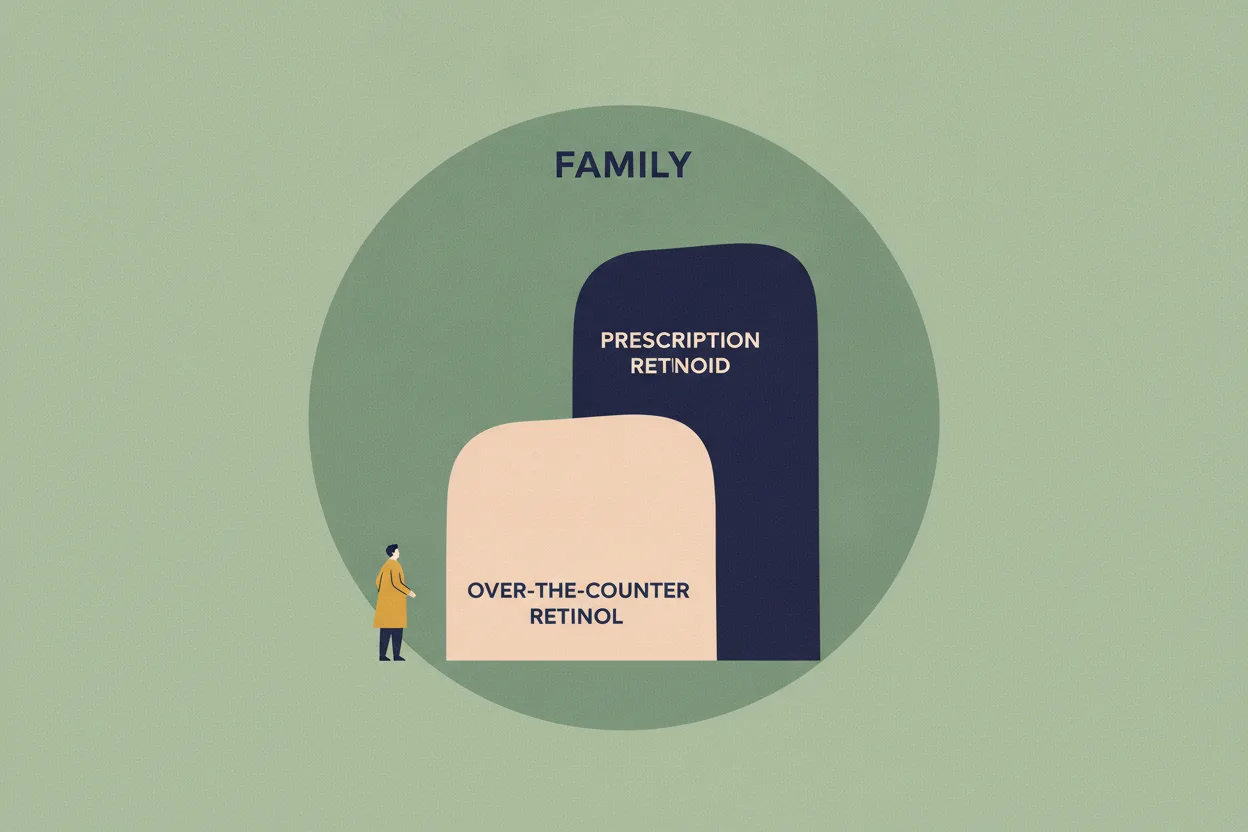
Irritation is the main practical limit. Dryness, redness, and peeling are common reasons people stop, and a Chinese patch-test study suggested Asian skin may be more reactive to retinol. Neither source tested milia. For background on how retinol works, see our retinol guide.
What to do about milia right now
Bottom line: if your milia are few and not bothering you, the evidence favors waiting. The procedures DermNet lists are done by a clinician, so picking at them at home is not one of the recognized options [1].
See a dermatologist if they are widespread, persistent, or appeared after starting a new prescription. If you want to try a topical retinoid, ask whether tretinoin or retinol makes sense for your skin, and stop at any irritation that does not settle.
Frequently asked questions
Does tretinoin get rid of milia?
Case reports describe tretinoin clearing milia in a few people, including near-complete clearance after about six months in one patient. No controlled trial has tested it for milia, so it is not an established treatment and results will vary.
Do milia go away on their own?
Often, yes. DermNet NZ notes that milia commonly clear within a few months and do not need treatment unless they bother you. Stubborn or widespread ones can be removed by a dermatologist with a sterile needle, blade, or cryotherapy.
Can retinol cause milia?
We found no reports of retinol causing milia. Milia have been reported with isotretinoin, a prescription oral retinoid, so the risk is documented for that drug, but retinol's specific risk is unknown rather than shown.
Sources (7)
- Milium, milia — DermNet NZ
- Eruptive Milia and Rapid Response to Topical Tretinoin — JAMA Dermatology 2008
- Secondary milia treated with topic tretinoin: Pediatric case report — JAAD
- Milia En Plaque After Bullous Pemphigoid: An Unusual Sequela — PMC
- Milia en plaque: a case report and review of the literature — PubMed
- Isotretinoin-Associated Eruptive Milia: A Rare Adverse Effect — PubMed
- Retinol on Human Skin Aging in East Asian Descent trial protocol, NCT02906566 — ClinicalTrials.gov