Retinol
Is retinol safe to use when you are pregnant?
No study we found tests cosmetic retinol in pregnancy, so the practical answer leans toward skipping it while you are pregnant.

By Artifact Editors, Editorial team
Published · 4 min read

In this article
Short answer: skip retinol while you are pregnant
Skip it unless a clinician who knows your history tells you otherwise. We found no study that tests over-the-counter retinol, retinyl esters or retinaldehyde in pregnant people. The evidence we did find covers prescription topical retinoids such as tretinoin, adapalene and tazarotene, and even there the picture is mixed rather than settled.
The European Medicines Agency and Australia's Therapeutic Goods Administration advise against topical retinoids in pregnancy as a precaution, even though evidence of fetal harm from topical use is limited [1]. That same caution is the practical rule for retinol, since your skin has to convert it into the active form. For background on how retinol works, see our retinol basics guide.
Retinol is not the same molecule as the drugs we have data on
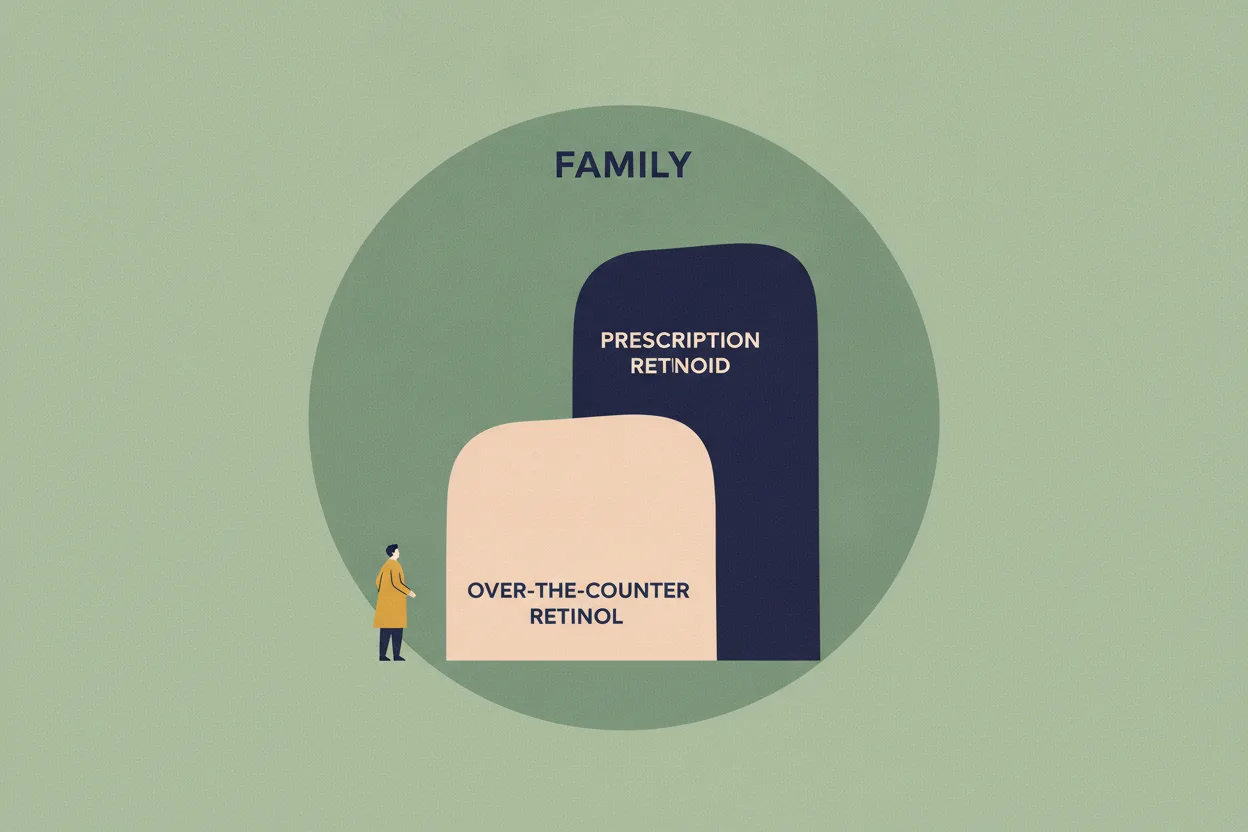
Most of the human data involve tretinoin, a prescription form of retinoic acid that is already active. Retinol has to be converted in the skin first, so its absorption and effects cannot be read straight from those studies.
A review of topical products in pregnancy reports that tretinoin 0.1% gel gives less than 1% systemic absorption after a single application, and under 2% with cream. Those figures are useful for the drug, but they are not a measurement for cosmetic retinol.
The human data are reassuring in places and inconclusive in others
The most recent systematic review and meta-analysis we could find looks at topical retinoids and major birth defects or spontaneous abortion. Its authors describe the topical safety question as still debated, with some studies finding no increase and others finding non-significant associations. We could not access the full text, so we cannot give you pooled risk estimates from it [1].
A multicentre prospective study cited in that pregnancy skin-care review found women exposed to topical retinoids in the first trimester were not at higher risk for major birth defects above the baseline rate of 1% to 3% [2]. That is encouraging, but a single study cannot settle the question.
The 2025 label for Retin-A Micro summarizes published observational and retrospective cohort studies and says they have not established a drug-associated risk of major birth defects. The same label flags real limits, including possible misclassification of exposure, small samples and, in some cases, no physical exam by a birth defects expert [4].
The warnings from labels and reporting systems are stricter
An FDA pharmacovigilance review of topical retinoids counted 68 serious cases of abnormal pregnancy outcomes linked to single-ingredient products, including alitretinoin, bexarotene, tazarotene and tretinoin [7]. These are the most common outcomes reported in that review.
| Reported outcome | Cases |
|---|---|
| Miscarriage | 24 |
| Congenital heart defect | 11 |
| Brain defects | 10 |
| Cleft palate | 8 |
Spontaneous reports cannot prove that a drug caused an event. The same review notes that epidemiologic studies of topical retinoids in general do not suggest a higher risk of birth defects after exposure in early pregnancy [7].
The product labels are firmer. The tazarotene cream label lists the drug as contraindicated in pregnancy, cites malformations in rats and rabbits after both topical and oral dosing, and says the risk to the fetus outweighs any benefit to the mother, so use should stop once pregnancy is recognized [6]. The 2018 Altreno label warns that absorption may still result in fetal exposure and notes reports of major birth defects similar to those seen with oral retinoids [5].
What we still don't know, and what to do instead
The biggest gap is cosmetic retinol itself. We found no direct safety study of it in pregnancy. The closest human data are about nutrient levels in blood. One serum study of 31,301 prenatal outpatients found retinol levels did not change significantly across pregnancy, which says nothing about applying a product to your skin [9].
The older tretinoin label, the source of the old Category C framing, says there are no adequate and well-controlled studies in pregnant women. Its animal doses were far above human topical exposure, so read those numbers as a safety margin, not a risk estimate [8]. Acne reviews make the same point: most experts advise avoiding all topical retinoids in pregnancy, even though these drugs are minimally absorbed [3].
We also did not find current position statements on topical retinoids from the American Academy of Dermatology or ACOG, so check those directly before you decide. In the meantime, these are the steps we would take:
- Stop retinol as soon as you know you are pregnant.
- Tell your OB, midwife or dermatologist what you have been using, including over-the-counter products.
- Ask about acne or texture options with a clearer pregnancy record before reaching for a retinoid.
- Daily sunscreen and a basic gentle moisturizer are low-stakes choices to talk through with your clinician.
Frequently asked questions
Is retinol the same as tretinoin in pregnancy?
No. Tretinoin is a prescription form of retinoic acid that is already active, while retinol must be converted in the skin first. Most pregnancy data come from tretinoin, adapalene and tazarotene, so those findings cannot be applied directly to retinol. Treat them as related but not interchangeable.
What if I used retinol before I knew I was pregnant?
Stop using it once you know, and mention it at your next prenatal visit. The pregnancy risk of cosmetic retinol has not been measured in any study we found, so a clinician who knows your history is the right person to weigh it. Try not to panic over a few uses.
Sources (9)
- Topical retinoids and risk of major congenital malformations and spontaneous abortion: a systematic review and meta-analysis
- Skin Changes and Safety Profile of Topical Products During Pregnancy
- Treatment of Acne Vulgaris During Pregnancy and Lactation: A Narrative Review
- RETIN-A MICRO tretinoin gel, for topical use, FDA label 2025
- ALTRENO tretinoin FDA label 2018
- AVAGE tazarotene Cream FDA label 2016
- FDA Application 020380Orig1s010 adapalene review
- RETIN-A Cream/Gel/Liquid tretinoin FDA label 2002
- Retinol and α-tocopherol in pregnancy: Establishment of reference intervals and associations with CBC